Live Magazine Show 2026-2027 edge / Borde
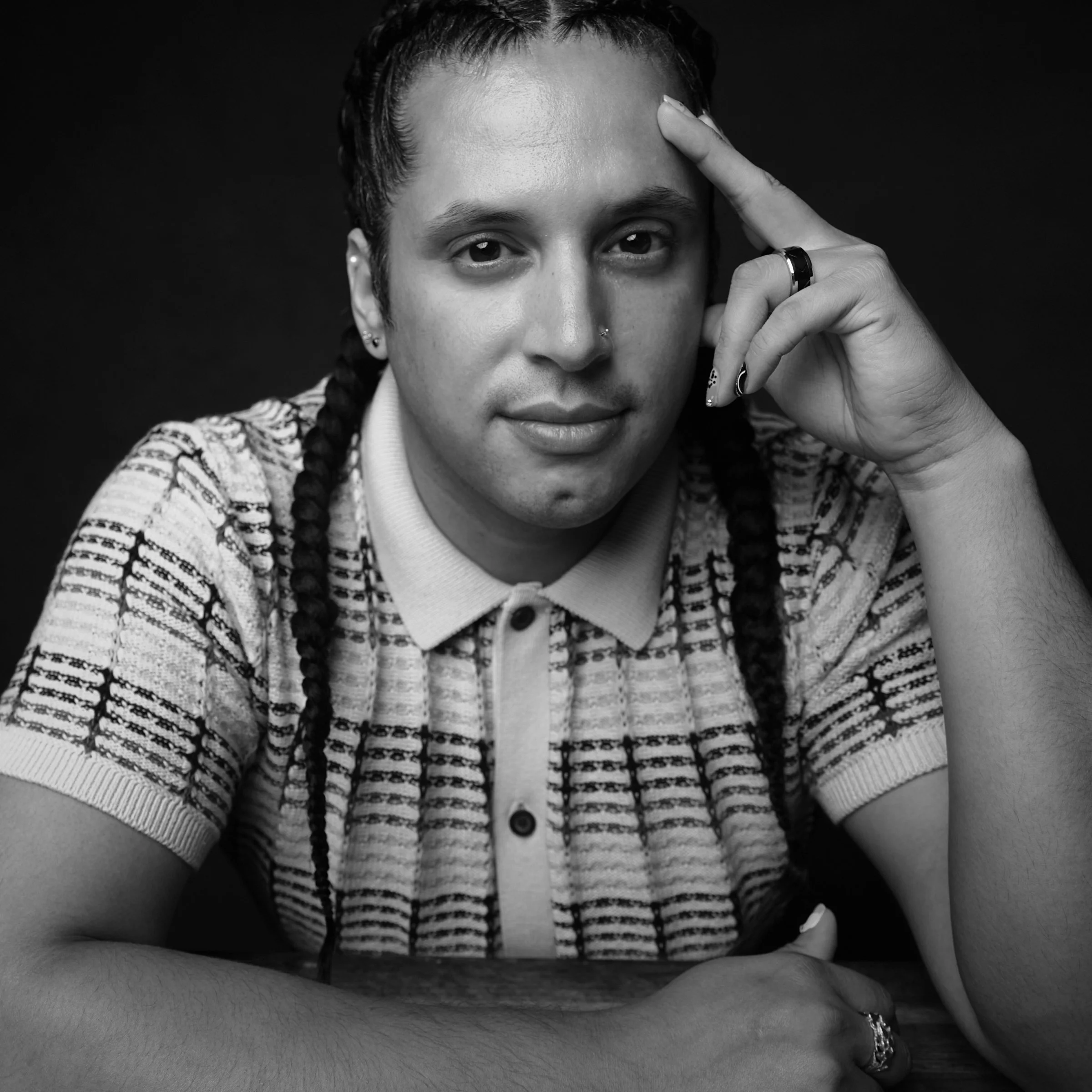
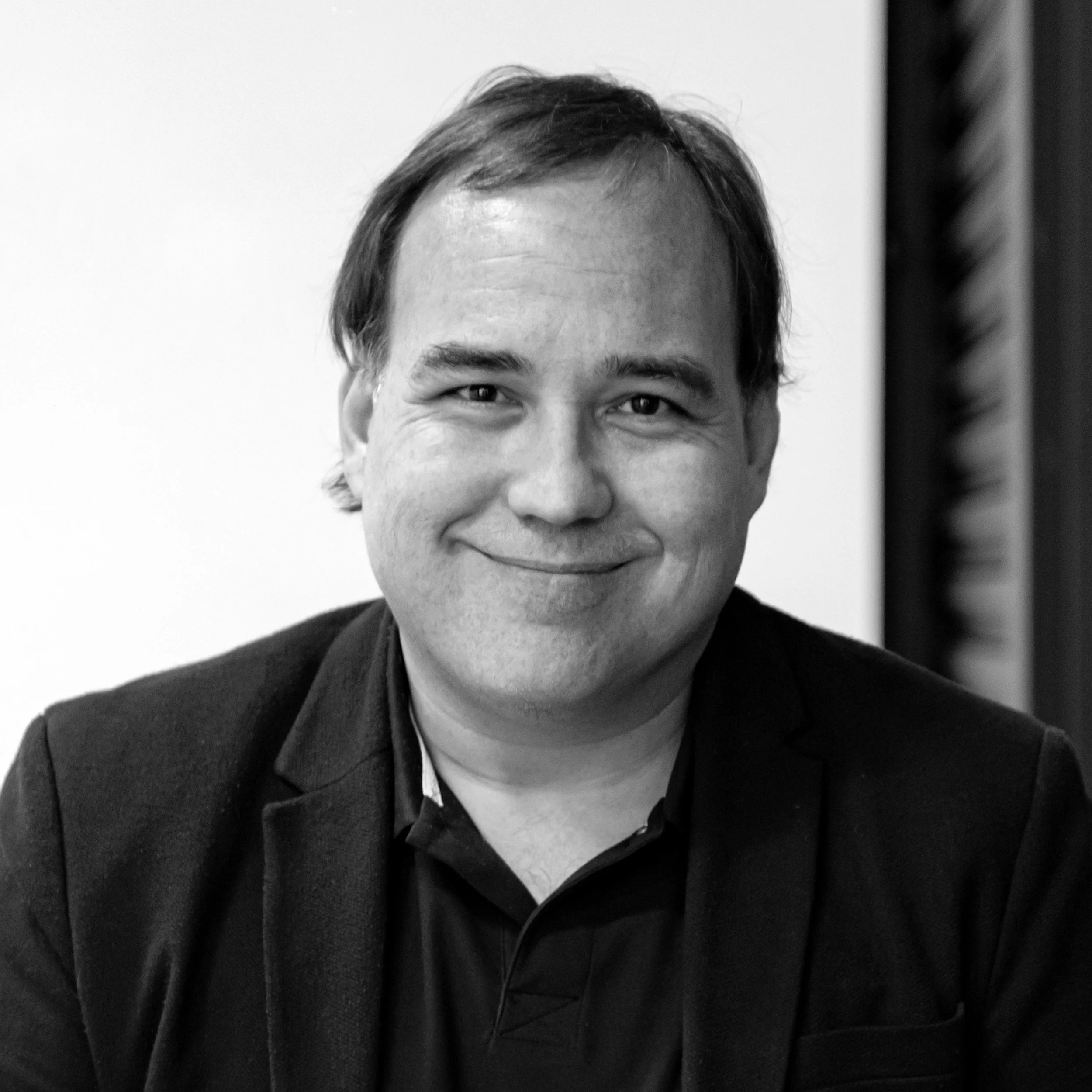
Ricardo Gamboa + Rubén Gutiérrez
TWO VOICES / ONE BODY
PRIMER ACTO / FIRST ACT
Escrito por / Writing by Rubén Gutiérrez
¿Qué inventamos para no desaparecer?
Quisiera comenzar con una afirmación que puede parecer obvia, pero que tiene consecuencias bastante extrañas:
La memoria no conserva el pasado.
Lo reconstruye.
No almacenamos acontecimientos como almacenamos archivos. No existe una versión
original de nuestra vida esperando ser recuperada. Cada vez que recordamos,
producimos nuevamente aquello que llamamos recuerdo.
La memoria ocurre en presente.
Esto significa que recordar no es mirar hacia atrás. Es intervenir sobre aquello que ya
ocurrió.
Seleccionamos.
Ordenamos.
Eliminamos.
Completamos.
A veces modificamos.
Y, sobre todo, establecemos relaciones entre acontecimientos que originalmente quizá
no las tenían.
La memoria necesita una estructura.
Por eso probablemente contamos nuestra vida como contamos una historia: buscamos
causas, consecuencias, personajes, momentos decisivos. Transformamos una
sucesión arbitraria de acontecimientos en algo que parece tener sentido.
El problema es que una vida no tiene necesariamente sentido.
El sentido aparece después.
Lo construimos retrospectivamente.
Paul Ricoeur llamó a esto identidad narrativa: la idea de que una parte de aquello que
llamamos “yo” depende de la historia que construimos sobre nosotros mismos.
No somos únicamente aquello que nos sucedió.
Somos también la interpretación que hacemos de aquello que nos sucedió.
Y esa interpretación cambia.
Por eso una misma persona puede contar cinco veces el mismo acontecimiento y
producir cinco versiones diferentes.
No necesariamente porque esté mintiendo.
Sino porque ninguna memoria es neutral.
Mi madre tiene noventa y cinco años.
Cuando tenía veintidós llegó a Chicago con mi padre y mis dos hermanos, que
entonces eran bebés.
Yo no estaba allí.
No tengo memoria de ese viaje.
No recuerdo el Chicago que ella conoció.
No conozco sus calles como ella las conoció.
No conozco el frío que experimentó.
No conozco exactamente qué pensaba mientras intentaba construir una vida en una
ciudad desconocida.
Tengo algunas fotografías.
Muy pocas.
Y tengo sus relatos.
Por lo tanto, mi relación con ese Chicago es necesariamente ficticia.
No porque sea falsa.
Porque es una reconstrucción.
Yo recuerdo algo que no viví.
Y eso me lleva a una pregunta:
¿Cuántas de las cosas que creemos recordar son realmente recuerdos y cuántas son
historias que hemos escuchado tantas veces que terminaron convirtiéndose en nuestra
memoria?
Probablemente no existe una respuesta definitiva.
Y quizá tampoco importa.
Porque una ficción puede ser falsa en sus hechos y verdadera en su efecto.
Una persona puede no recordar exactamente lo que ocurrió y, sin embargo, recordar
perfectamente lo que aquello significó.
Ahí la ficción deja de ser lo contrario de la verdad.
Se convierte en uno de sus instrumentos.
La memoria también tiene una función práctica.
Recordamos para anticipar.
Recordamos para decidir.
Recordamos para evitar.
El pasado es utilizado por el presente para imaginar el futuro.
En ese sentido, recordar no es conservar lo que fuimos.
Es una tecnología para determinar lo que podemos llegar a ser.
Y quizá por eso olvidamos.
Nietzsche entendió que una memoria absoluta sería incompatible con la vida. Si cada
acontecimiento permaneciera disponible, si cada pérdida conservara intacta su
intensidad, si cada error pudiera ser reproducido sin modificación, vivir sería una forma
de archivo permanente.
Necesitamos olvidar.
Pero necesitamos recordar.
El ser humano vive entre esas dos operaciones.
Olvidar para continuar.
Recordar para reconocerse.
Y entre ambas operaciones aparece la ficción.
Tal vez por eso hacemos arte.
No porque podamos recuperar el pasado.
Eso es imposible.
Hacemos arte porque necesitamos producir objetos capaces de relacionarnos con
aquello que ya no está.
Una fotografía.
Una película.
Una novela.
Una canción.
Un cuerpo sobre un escenario.
Todos son mecanismos de sustitución.
No devuelven lo perdido.
Producen una forma para aquello que falta.
Y quizá una historia sea eso:
una tecnología para hacer presente algo que ya no está.
Pero hay algo todavía más extraño.
¿Por qué alguien escucha?
¿Por qué una persona permanece sentada frente a otra durante varios minutos
mientras esa otra habla?
No existe una obligación.
No hay información indispensable.
Nadie necesita saber qué recuerda mi madre sobre Chicago para continuar con su vida.
Y, sin embargo, ustedes están aquí.
Escuchando.
Esto me interesa casi tanto como la memoria.
Porque escuchar una historia también es una forma de producir memoria.
Durante unos minutos, una experiencia que no les pertenece entra en su imaginación.
Ustedes construyen imágenes de una ciudad que quizá nunca han visto.
Inventan un rostro.
Un invierno.
Una casa.
Una mujer de veintidós años.
A partir de unas pocas palabras.
Eso significa que la historia ya no pertenece a quien la cuenta.
En el momento en que alguien escucha, comienza otra versión.
El narrador entrega una estructura incompleta.
El espectador la termina.
La memoria deja de ser individual.
Se convierte en una operación colectiva.
Y quizá ahí está la razón por la que seguimos contando historias.
No para preservar exactamente lo que ocurrió.
No para demostrar que estuvimos aquí.
Ni siquiera para encontrar una verdad definitiva.
Contamos historias porque necesitamos que algo continúe circulando después de que
nosotros hayamos terminado de hablar.
Una experiencia pasa de un cuerpo a otro.
Una memoria se modifica.
Una ficción produce otra ficción.
Y durante unos minutos, algo que ocurrió hace décadas en una ciudad que quizá nunca
conocimos vuelve a existir en la imaginación de un grupo de desconocidos.
No es el pasado.
No es la verdad.
No es exactamente ficción.
Es algo intermedio.
Algo que solamente existe mientras alguien escucha.
Y quizá eso sea todo lo que podemos pedirle a una historia.
No que conserve el pasado.
Sino que consiga sobrevivir a quien la cuenta.
Entonces la pregunta ya no es únicamente:
¿Qué recordamos?
Sino:
¿Qué inventamos para no desaparecer?
English Translation
What do we invent in order to keep from disappearing?
I'd like to begin with a statement that may seem obvious, but which has consequences that are quite strange:
Memory doesn't preserve the past.
It reconstructs it.
We don't store events the way we store files. There's not an original version of our life waiting to be recovered. Every time we remember, we re-produce that which we call memory.
Memory occurs in the present.
This means that remembering is not looking backwards. It's intervening something that already occurred.
We select.
We put in order.
We eliminate.
We complete.
At times we modify.
And, above all, we establish relationships between events that may not originally have been related.
Memory needs a structure.
That's probably why we tell our lives like we tell a story: we look for causes, consequences, characters, decisive moments. We transform an arbitrary series of events into something that seems to make sense.
The problem is that a life doesn't necessarily make sense.
The sense shows up later.
We construct it retrospectively.
Paul Ricoeur called this narrative identity: the idea that one part of what we call "I" depends on the story we construct about ourselves.
We are not only what happened to us.
We are also the interpretation we have of what happened to us.
And that interpretation changes.
That's why the same person can tell the same event five times and produce five different versions.
Not necessarily because they’re lying.
But because no memory is neutral.
My mother is ninety-five.
When she was twenty-two, she arrived in Chicago with my father and my two siblings, who were babies at the time.
I wasn't there.
I have no memory of that voyage.
I don't remember the Chicago that she encountered.
I don't know its streets the way she did.
I don't know the cold she experienced.
I don't exactly what she was thinking while she was trying to build a life in an unfamiliar city.
I have some photographs.
Very few.
And I have her stories.
Therefore, my relationship to that Chicago is necessarily fictitious.
Not because it's false.
Because it's a reconstruction.
I remember something I didn't live.
And that leads me to a question:
How many of the things we believe we remember are actual memories, and how many are stories we've heard so many times that they ended up becoming our memories?
There's probably not a definitive answer.
And maybe it doesn't even matter.
Because a story can be false in its events and true in its effect.
A person can not remember exactly what happened and, yet perfectly remember what it meant.
That is where fiction ceases to be the opposite of the truth.
It becomes one of its instruments.
Memory also has a practical function.
We remember in order to anticipate.
We remember in order to decide.
We remember in order to avoid.
The past is used by the present in order to imagine the future.
In that sense, remembering is not preserving what we were.
It's a technology to determine what we may come to be.
And maybe that's why we forget.
Nietzsche understood that absolute memory would be incompatible with life. If every event remained available, if every loss preserved its intensity intact, if every error could be reproduced without modification, living would be a kind of permanent archive.
We need to forget.
But we need to remember.
Human beings live between both processes.
Forgetting in order to go on.
Remembering in order to recognize ourselves.
And, between both processes, fiction appears.
Maybe that's why we make art.
Not because we can recover the past.
That's impossible.
We make art because we need to produce objects capable of connecting us to what's no longer
present.
A photograph.
A film.
A novel.
A song.
A body upon a stage.
They're all mechanisms for substitution.
They don't return what is lost.
They produce a shape for what's missing.
And maybe a story is that:
a technology to make present something that no longer is.
But there is something even stranger.
Why does anyone listen?
Why does a person remain seated across another for several minutes while that other one speaks?
There's no obligation.
There's no must-have information.
No one needs to know what my mother remembers about Chicago in order to go on with their life.
And yet, you're all here.
Listening.
That interests me almost as much as memory.
Because listening to a story is also a way of producing memory.
During a few minutes, an experience that isn't yours enters your imagination.
You build images of a city that you may never have seen.
You invent a face.
A winter.
A house.
A woman who is twenty-two.
From just a few words.
Which means that the story no longer belongs to the teller.
At the moment when someone is listening, another version begins.
The narrator provides an incomplete structure.
The spectator finishes it.
The memory ceases to be individual.
It becomes a collective process.
And maybe that's the reason why we go on telling stories.
Not in order to preserve exactly what happened.
Not in order to demonstrate we were there.
Not even in order to find a definitive truth.
We tell stories because we need something to continue circulating after
we've finished speaking.
An experience passes from one body to another.
A memory is modified.
One fiction produces another fiction.
And for a few minutes, something that happened decades earlier in a city we may never have known comes back to exist in the imagination of a group of strangers.
It's not the past.
It's not the truth.
It's not exactly fiction.
It's something in between.
Something which exists only while someone is listening.
And maybe that's all we can ask of a story.
Not for it to preserve the past.
But for it to survive the one telling it.
Then, the question is no longer only:
What do we remember?
But:
What do we invent in order to not disappear?
SECOND ACT / SEGUNDO ACTO
Writing by / Escrito por Ricardo Gamboa
I’ve been to the rancho and small town my grandparents came from
Before they crossed the border
My father was born on a migrant farm in Weslaco
Before his parents picked their way through fields
Into factories in Chicago
The first time I was in California, I thought about my grandfather
(My mother’s father)
He crossed the border and sold food
Outside a military base
Like hot dog and egg tacos
They crossed in the early 1950s
But no one ever fully crosses the border
I am not gesturing to that
“Ni de aquí/ni de allá” dated bullshit
I’m referring to the ontological state
Of the Mexican in America, the Mexican American
We can never cross over
Selena Quintanilla
Was shot and murdered
Ironically, by the President of her fan club
While recording her cross-over album
“Dreaming of You,” Selena’s English
And Spanish, fifth and final album
Was posthumously released on July 18, 1995
She never crossed over
The album: a haunting, a reminder
Of the ontological state
Of the Mexican in America
We can never cross over
July 1973, 12-year-old Santos Rodriguez was pulled from his home in Dallas and
handcuffed
Allegedly for robbing $8 from gas station vending machine, a charge he denied
Officer Darrell Lee Cain played a game of Russian roulette to force him to confess
The gun fired and killed Santos
(He served only 2 and half years for the murder)
July 2026, Lorenzo Salgado Araujo
An immigrant who had lived in the U.S. for over 35 years
In the process of obtaining legal status
Was and shot and killed by an ICE agent
While on his way to pick up his construction crew
The ontological state
The Porvenir Massacre of 1918
Alligator Alcatraz
2 million of us deported between 1929-1939
During Repatriation
3 million of us deported between 2008-2016
During the Obama administration
The Mexican in America
Border violence against Mexicans in the early 1900’s
Lynchings and sanctioned massacres
White men, deputized to ethnically cleanse
Like the Texas Rangers
(There’s still a Major League Baseball team named after them)
52 people have died in ICE custody in the past two years
Thousands are detained in conditions that violate human rights
Over 50% of ICE agents are Latino
(Is that crossing over?)
We can never cross over
Wonder Woman was Mexican
Played by Lynda Carter in the 1970s television series
Her mother: Juana Cordova, from Chihuahua, Mexico
Lynda Carter’s full name: Linda Jean Córdova Carter
The border was silent in her stage name
When I was a child
I used to pretend to be Wonder Woman
While my uncles called me a faggot
Lo que se ve no se pregunta
I’m uncircumcised
I hated getting undressed in the locker room
For swim practice around the white boys
A border, my foreskin
They used to gather migrant laborers like my grandparents
Call them dirty and disease carriers
Give them chemical baths
All my grandparents are dead
Survived by their children
My father doesn’t talk to his greedy brothers
Who fight over the building
My grandparents bought in the Mexican neighborhood of Pilsen
(That’s now gentrifying)
My mother doesn’t speak to her siblings
Her youngest brother and sister
Wear MAGA hats
(To cover nopales (en la frente))
The ontological state
Of the Mexican American
We can never cross over
Spanish Translation
He ido al rancho y al pueblo pequeño de donde eran mis abuelos
Antes de cruzar la frontera
Mi padre nació en una granja de migrantes en Weslaco
Antes de que sus padres, cosechando los campos se fueran
Hasta llegar a las fábricas en Chicago
La primera vez que estuve en California, pensé en mi abuelo
(El padre de mi madre)
Él cruzó la frontera y vendió comida
A la salida de una base militar
Como hot dog y tacos de huevo
Ellos cruzaron a comienzos de los años 50
Pero nadie nunca cruza la frontera del todo
No me estoy refiriendo a ese
Viejo cuento "ni de aquí/ni de allá"
Me estoy refiriendo al estado ontológico
Del mejicano en los Estados Unidos, al mejicano americano
Nunca podemos cruzar del todo
Selena Quintanilla
Fue asesinada a disparos
Irónicamente, por la presidente de su club de fans
Mientras grababa su álbum de cruce híbrido
"Dreaming of You," el álbum en inglés
Y español, su quinto y último álbum
Fue lanzado póstumamente el 18 de julio de 1995
Ella nunca logró completar el cruce
El álbum: inquieto recordatorio fantasmal
Del estado ontológico
Del mejicano en los Estados Unidos
Nunca podemos cruzar del todo
Julio 1973, a Santos Rodríguez de 12 años lo sacaron de su casa en Dallas
y lo esposaron
Presuntamente por robar $8 de una maquina expendedora en una gasolinera, cargo que él negó
El oficial Darrell Lee Cain jugó a la ruleta rusa para obligarlo a confesar
El arma disparó y mató a Santos
(Él sirvió solamente 2 años y medio por el asesinato)
Julio 2026, Lorenzo Salgado Araujo
Un inmigrante que había vivido in los Estados Unidos por más de 35 años
En el proceso de obtener estado legal
Un agente de ICE le disparó y lo mató
Cuando iba camino a recoger a su equipo de construcción
El estado ontológico
La Masacre de Porvenir de 1918
Alligator Alcatraz
2 millones de nosotros deportados entre 1929 y 1939
Durante la Repatriación
3 millones de nosotros deportados entre 2008 y 2016
Durante el gobierno de Obama
El mejicano en los Estados Unidos
La violencia en la frontera contra mejicanos a comienzos del siglo veinte
Ahorcamientos y masacres sancionadas
Hombres blancos, autorizados a llevar a cabo limpieza étnica,
Como los Texas Rangers
(Aún existe un equipo de béisbol de Ligas Mayores con ese nombre)
52 personas han muerto bajo la custodia de ICE en los últimos dos años
Miles están detenidas en condiciones que violan los derechos humanos
Mas del 50% de los agentes de ICE son latinos
(¿Eso es cruzar del todo?)
Nunca podemos cruzar del todo
La Mujer Maravilla era mejicana
Interpretada por Lynda Carter en la serie de televisión de los años 70
Su madre: Juana Córdova, oriunda de Chihuahua, México
El nombre completo de Lynda Carter: Linda Jean Córdova Carter
En su nombre artístico, no se pronunciaba la frontera
Cuando yo era niño
Jugaba a ser la Mujer Maravilla
Mientras mis tíos me llamaban maricón
What you see you don't ask
No soy circuncidado
Odiaba desvestirme en el camarín
Para la hora de natación entre los niños blancos
Una frontera, mi prepucio
Solían reunir a los jornaleros migrantes como mis abuelos
Llamándolos sucios y portadores de pestes
Dándoles baños químicos
Todos mis abuelos están muertos
Les sobreviven sus hijos
Mi padre no les habla a sus codiciosos hermanos
Que se pelean por el edificio
Que mis abuelos compraron en el barrio mejicano de Pilsen
(Que ahora se elitiza)
Mi madre no les habla a sus hermanos
Su hermano y hermana menores
Llevan gorras MAGA
(Para tapar los nopales - en la frente)
El estado ontológico
Del mejicano americano
Nunca podemos cruzar del todo