Read with the Lit & Luz Book Club!
Join the Lit & Luz Book Club/Club de lectura this summer and fall to read and discuss some of today’s most exciting contemporary Mexico and Chicago based authors in both Spanish and English.
Founded in 2018 by writer and Lit & Luz Literary Director emeritus, Miguel Jiménez, the esteemed local reading group is hosted this year by author and performer Angelica Julia Dávila and is an opportunity for Chicagoans to read latinx literature in translation and recent works by authors in Lit & Luz’s Collaboration Cohort and community.
The 2026 Lit & Luz Book Club will partner this summer and fall with Time and a half books, Pilsen Community Books, and Las Chicas de Pilsen to host conversations and activities once a month. At these meetups, Book Club participants will also be able to explore themes from the book through a writing or art exercise.
July
Poetry After Barbarism: The Invention of Motherless Tongues and Resistance to Fascism by Jennifer Scappettone (Columbia University Press, 2025)
Meet up: August 23, 12:00pm
at Pilsen Community Books
August
String Theory / Teoría de Cuerdas by Karen Villeda, translated from the Spanish by NAFTA (Cardboard House Press, 2025)
Meet up: August 20, 7:00pm
at Time and a half Books
September
Tsunami: Women’s Voices from Mexico edited and translated by Heather Cleary and Gabriela Jauregui with additional translations by Julianna Neuhouser, Gabriela Ramirez-Chavez, and Julia Sanches
(The Feminist Press at the City University of New York, 2025)
Meet up: September 20, 12:00pm
at Pilsen Community Books
October
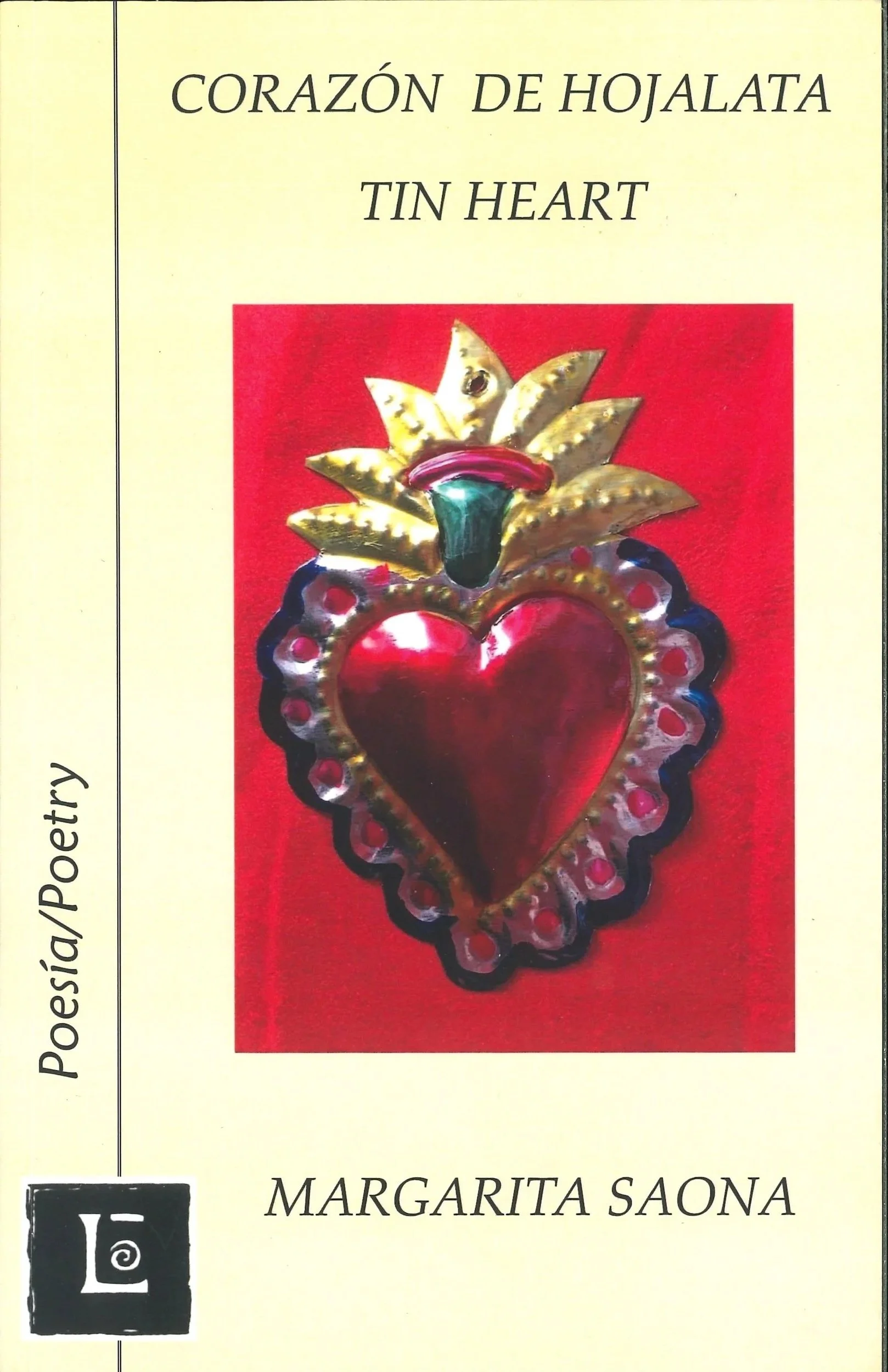
Corazón de hojalata / Tin Heart by Margarita Saona (Pandora Lobo Estepario Productions, 2017)
Meet up: October 24, 11:00 AM
At the Chicago Public Library
Manning Branch
Find these titles at your local book shop, including the 2026 Lit & Luz Book Club Partners Pilsen Community Books & Time and a half books
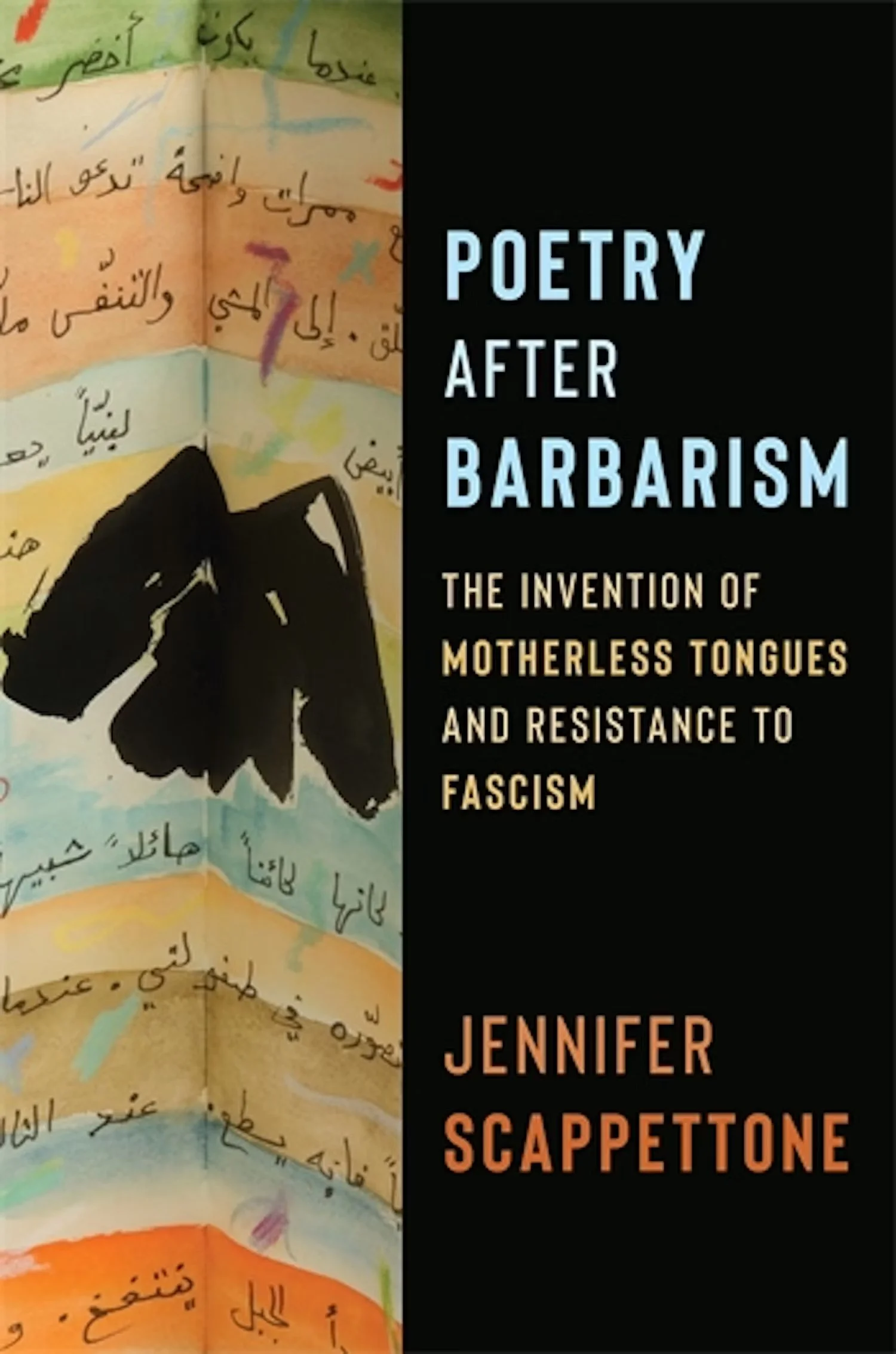
July
Poetry After Barbarism: The Invention of Motherless Tongues and Resistance to Fascism by Jennifer Scappettone (Columbia University Press, 2025)
Pilsen Community Books
1531 W 18th St, Chicago, IL 60608
Sunday, August 23th, 2026
12:00 PM CT
From the Publisher
About the Book:
Winner, 2026 Book Prize in Literary and Cultural Studies, American Association for Italian Studies
Against a backdrop of xenophobia and ethnonationalist fantasies of linguistic purity, Poetry After Barbarism uncovers a stateless, polyglot poetry of resistance—the poetry of motherless tongues. Departing from the national and global paradigms that dominate literary history, Jennifer Scappettone traces the aesthetic and geopolitical resonance of “xenoglossic” poetics: poetry composed in the space of contestation between national languages, concretizing dreams of mending the ruptures traced to the story of Babel. As global migration, aerial bombardment, and the wireless telegraph shrank distances with brute force during the twentieth century, visions of transcultural communication emerged in the hopes of bridging linguistic difference. At the same time, evolving Fascist ideologies denied the reality of cultural admixture and the humanity of the stranger.
Authors who write xenoglossic verse occupy languages without a perceived birthright or sanctioned education; they compose in ecstatic “orphan tongues” that rebuff nationalist ideologies, on the one hand, and globalization, on the other, uprooting notions of belonging ensconced in nativist metaphors of milk, blood, and soil while rendering the reactionary category of the barbarian obsolete. Raised within or in the wake of fascism, these poets practice strategic forms of literary and linguistic barbarism, proposing modes of collectivity that exceed geopolitical definitions. Studying experiments between languages by immigrant, refugee, and otherwise stateless authors—from Baroness Elsa von Freytag-Loringhoven to Emilio Villa, Amelia Rosselli, Etel Adnan, LaTasha N. Nevada Diggs, Chika Sagawa, and Sawako Nakayasu—this book explores how poetry can both represent and jumpstart metamorphosis of the shape and sound of citizenship, modeling paths toward alternative republics in which poetry might assume a central agency.
About the Author:
Jennifer Scappettone is a professor of literature, creative writing, gender studies, and environmental humanities at the University of Chicago. She is the author of Killing the Moonlight: Modernism in Venice (Columbia, 2014) and the cross-genre verse books From Dame Quickly and The Republic of Exit 43. She is also the translator of Locomotrix: Selected Poetry and Prose of Amelia Rosselli.
Praise for the Book:
"In Poetry After Barbarism, Jennifer Scappettone argues for nomadic, miscegenated, “xenoglossic” poetries as fierce forms of linguistic and political resistance. Prodigiously researched cross-cultural readings celebrate a stellar constellation of consequential poets: Elsa von Freytag-Loringhoven, Emilio Villa, Amelia Rosselli, Etel Adnan, and LaTasha N. Nevada Diggs." Charles Bernstein, author of The Kinds of Poetry I Want: Essays and Comedies
"Scappettone has gathered a queer family of literary orphans to found a pentecostal, radically stateless poetic nation: a new tradition built on undoing empire, unlearning mastery, and lighting a path through the ruins of fascist aesthetics. In a time of recrudescence, her scholarship shows us that xenoglossia and poetry are not reactions or responses, but rather alternatives to fascism." Alessandro Giammei, Department of Italian Studies, Yale University
"Xenoglossia, as illuminating critical theory and resistant, liberatory poetic practice, feels especially appropriate for our current moment of rising authoritarianism, nationalism and fascism, and Jennifer Scappettone provides an excellent guide through her rigorous, nuanced readings in Poetry After Barbarism. Brimming with insight, politically aware, and written with verve, this is one study that will be as useful to fellow scholars as to poets and other artists in charting a path forward to the future." John Keene, Distinguished Professor of English and Africana Studies, Rutgers University-Newark
"An exercise in disfluency, advocating these difficult and between-states/stateless voices with scholarly attention that is animated by a fellow-poet's political passion and compassion for the peoples under subjection." Blackbox Manifold
August
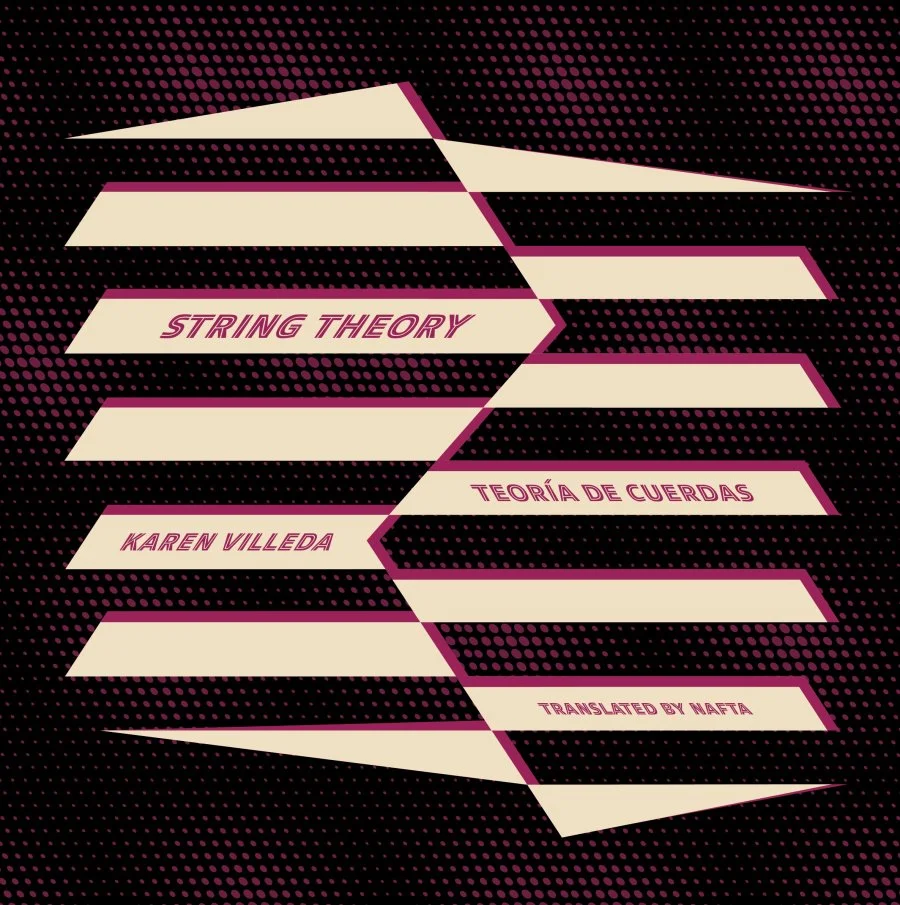
String Theory Teoría de Cuerdas by Karen Villeda, translated from the Spanish by NAFTA (Cardboard House Press, 2025)
Time and a Half books
4839 N Damen Ave, Chicago, IL 60625
Thursday, August 20th, 2026
7:00 pm CT
From the Publisher
About the Book:
Karen Villeda’s String Theory is a long autobiographical poem that explores and interrogates the act of suicide from an intimate perspective. The poem grapples with the anguish, fear, and melancholia that pushes someone to end their life as it traces the echoes and ripples that the act leaves on those close to the deceased in their ongoing attempts to understand the event. String Theory addresses the ineffability of death via an obstinate language that ends up affirming life: “How to materialize a death? | How to say no to a dead woman? But yes.” Villeda strips language to its most naked, aiming to probe what her first mentor, Mexican poet Elsa Cross, describes as “the true test of a poem.” String Theory won the Gilberto Owen National Literature Award in Mexico in 2018.
About the Author:
Karen Villeda was born in Tlaxcala, Mexico in 1985. To date, she has published three non-fiction books, seven collections of poetry, and three children’s books. Her most recent are Teoría de cuerdas (Vaso Roto, 2023) and Anna y Hans [Anna and Hans] (Fondo de Cultura Económica, 2021). Her work has been recognized with over fifteen literary prizes, including the 2018 Gilberto Owen Prize, and has been translated into several languages including German, Arabic, French, Greek, Portuguese, and English. Her book Dodo is held in the US Library of Congress’s Archive of Hispanic Literature on Tape, one of only a handful of works by women writers from Mexico to form part of this collection. In 2015, she participated in the International Writing Program at the University of Iowa and, in 2018, was a Resident Writer at the Vermont Studio Center. In 2021, she received the Golden Page Fellowship, for writers under the age of forty. Her work has received support from the Pollock-Krasner Foundation, Open Society Foundations, Ragdale Foundation, Central European University, Under the Volcano, the Fondo Nacional para la Cultura y las Artes and the Sistema de Apoyos a la Creación y Proyectos Culturales. Learn more at her multimedia literature website, www.poetronica.net.
About the Translators:
The North American Free Translation Agreement/No America Fraught Translation Argument (NAFTA), ratified in 2019, currently consists of three poets writing from the occupied territories of Canada, Mexico, and the United States: Whitney Celeste DeVos, Zane Koss, and Gerónimo Sarmiento Cruz. Together, they are the translators of Hugo García Manríquez’s COMMONPLACE / Lo Común (Cardboard House, 2022) and José Antonio Emmanuel’s La Anarquía explicada a los niños (Triangle Square, 2025). Their collaborative translations of Jesús Arellano Meléndrez’s “poelectrons” have also appeared in Denver Quarterly.
Praise for the Book:
String Theory gripped me from start to finish: I surfaced, gasping. In this book-length poem in fragments, Villeda invents an investigative poetics. It is not an attempt at resurrection, no, but a lyric diary that spins around an absence, a mystery, a haunting, an attempt “to reap my unname in the bone marrow,” even as it remains impossible to discern whether the author’s namesake took her own life or lost it to violence within a context of femicides. String Theory possesses the candor, captivating musicality, and willingness to gaze into the darkness of Alejandra Pizarnik, Isabel Zapata, Sara Uribe, Diana del Angel, Dolores Dorantes. Much praise to NAFTA for conjuring an astonishing version of this book in English, with propulsive syntax and searing diction that manages, magically, to resonate with the melody of the Spanish.
—Rachel Galvin, author of Uterotopia
One step forward, one back, Karen Villeda braids poem-structures that string her readers along, pick us up, let us spin, poke at our stitches, rope us in, knot us, and won’t release us. With relentless meticulousness, her String Theory disentangles the present-absence of a woman, the sister of a parent, a life extinguished before Villeda was able to speak and understand. Yet she bears her name. We witness the poet’s testimony to this absence, to a nothing, an un-thing, thought and thinking, until it is truly something. Something testy, testing, tessellating, that refuses to rest in mere testimonial. Someone. And the translation is magnificent: solemn, intimate, it follows each stitch closely, each rhythm, each chord and umbilical cord, each tensed condensation of sorrow and defiance. A triumph of a book!
—Erín Moure, author of Theophylline: A Poetic Migration
Karen Villeda’s String Theory is at once a meditation on death and a performance of language as “a body that erases itself.” With its long lists and its flows and bursts of prose, it propels process poetics through the exhaustion of the conceptual and toward a confrontation with “the digression of a person” that feels oddly hopeful in our necropolitical moment. In conversation with María Zambrano, Villeda refuses to disentangle philosophy from poetry, instead summoning dark forces and recasting knowledge as a “bilocation of the senses.” NAFTA’s translation vividly renders the tautness of Villeda’s syntax of absence without surrendering its otherworldly thrum.
—Urayoán Noel, author of Transversal: Poems
september
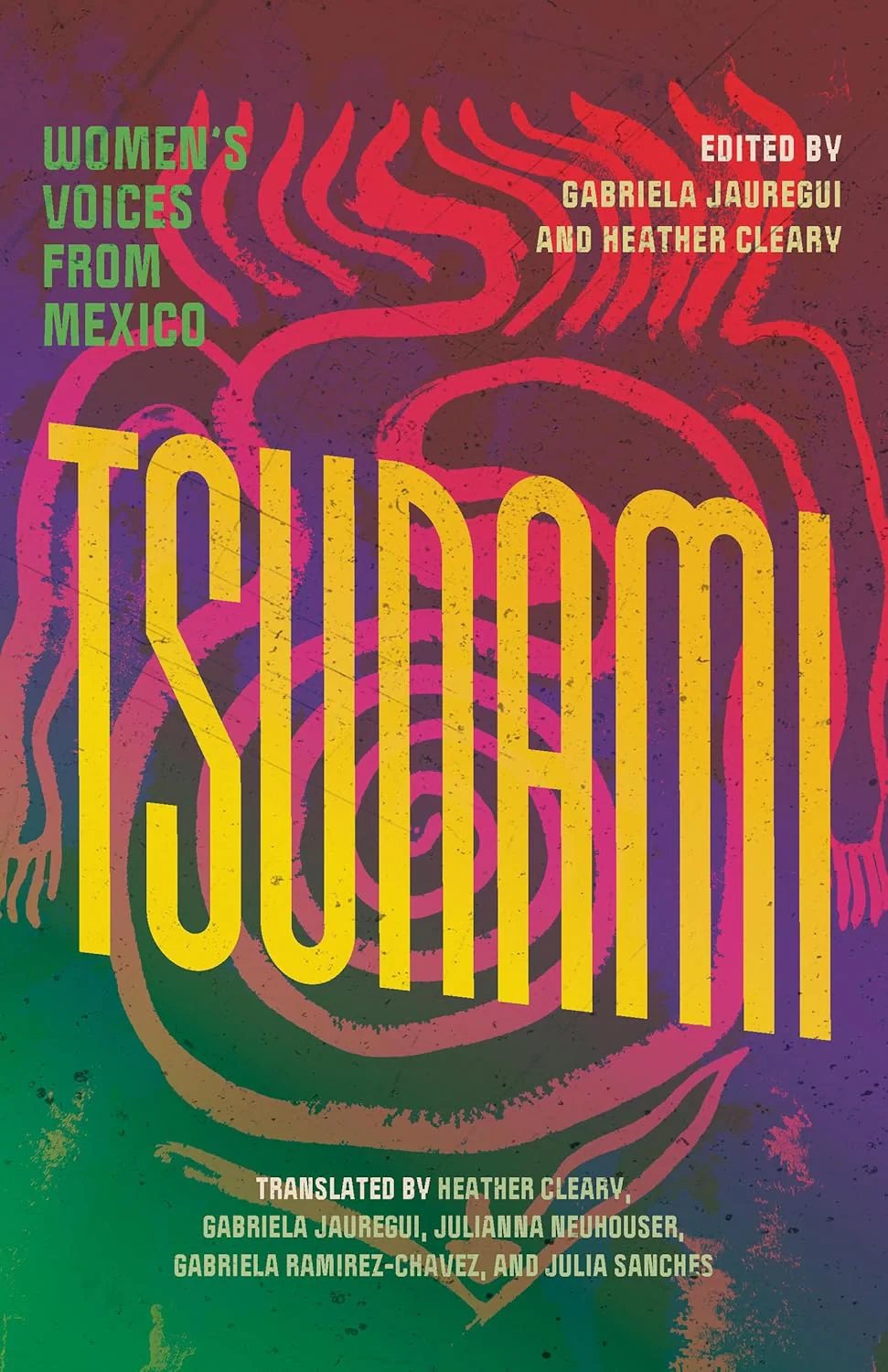
Tsunami: Women’s Voices from Mexico edited and translated by Heather Cleary and Gabriela Jauregui with additional translations by Julianna Neuhouser, Gabriela Ramirez-Chavez, and Julia Sanches (The Feminist Press at the City University of New York, 2025)
Pilsen Community Books
1531 W 18th St, Chicago, IL 60608
Sunday, September 20th, 2026
12:00 pm CT
From the Publisher
About the Book:
Merging waves of feminist thought from established and emerging Mexican women writers, Tsunami arrives with seismic, groundbreaking force.
Featuring personal essay, manifesto, creative nonfiction, and poetry, Tsunami gathers the multiplicity of voices being raised in Mexico today against patriarchy and its buried structures. Tackling gender violence, community building, #MeToo, Indigenous rights, and more, these writings rock the core of what we know feminism to be, dismantling its Eurocentric roots and directing its critical thrust towards current affairs in Mexico today. Asserting plurality as a political priority, Tsunami includes trans voices, Indigenous voices, Afro-Latinx voices, voices from within and outside academic institutions, and voices spanning generations. Tsunami is the combined force and critique of the three feminist waves, the marea verde (“green wave”) of protests that have swept through Latin America in recent years, and the tides turned by insurgent feminisms at the margins of public discourse.
Contributors include Marina Azahua, Yásnaya Elena Aguilar Gil, Dahlia de la Cerda, Alexandra R. DeRuiz, Lia García, Jimena González, Gabriela Jauregui, Fernanda Latani M. Bravo, Valeria Luiselli, Ytzel Maya, Brenda Navarro, Jumko Ogata, Daniela Rea, Cristina Rivera Garza, Diana J. Torres, Sara Uribe, and the Zapatista Army for National Liberation.
About the Editors:
Heather Cleary is an award-winning translator whose work with the poetry and prose of writers including Fernanda Trías, María Ospina, Roque Larraquy, Sergio Chejfec, and Oliverio Girondo has been recognized by English PEN, the National Book Foundation, the Best Translated Book Award, and the Mellon Foundation, among others. A member of the Cedilla & Co. translation collective, she was a founding editor of the digital, multilingual Buenos Aires Review. She holds a PhD in Latin American and Iberian cultures from Columbia University, and teaches at Sarah Lawrence College. She is the author of The Translator's Visibility: Scenes from Contemporary Latin American Fiction, and is currently writing a novel about translation and betrayal.
Gabriela Jauregui is the author of the novel Feral, the poetry collections Many Fiestas, Leash Seeks Lost Bitch, and Controlled Decay, and the short story collection La memoria de las cosas. She edited and coauthored two essay collections, Tsunami and Tsunami 2, published in Spanish in 2018 and 2021 respectively. She holds a PhD in comparative literature from USC, an MFA in creative writing from UC Riverside, and an MA in critical theory from UC Irvine. She is a Soros New American Fellow and a Borchard Fellow, and was selected as part of the Hay Festival's Bogotá 39 best young authors in Latin America. She is cofounder of the Aura Estrada Prize for young women writers and teaches at the National Autonomous University in Mexico (UNAM).
Praise for the book:
“Tsunami is a shock to the system, a seismic disturbance unsettling our narratives about the injustices women endure and the structures that enable them. Through these essays which scream against mass murder of women, challenge the erasure of indigenous struggle, and morph the oppressive norms hidden in our language, an alternate reality is already born.” —Miriam Toews, author of Women Talking
October
Corazón de hojalata / Tin Heart by Margarita Saona (Pandora Lobo Estepario Productions, 2017)
Chicago Public Library
Manning Branch
6 S Hoyne Ave, Chicago, IL 60612
Saturday, October 24th, 2026
11:00 am CT
From the Publisher
About the Book:
Tin Heart brings together a series of poems born out of the experience of cardiac failure, surgery, the proximity of death, a heart transplant, and other extreme situations. Margarita Saona confronts the pain, alienation, love, and otherness imposed by an infirm body with a language in which intensity, imagery, and rhythm do not detract from the simplicity of everyday words.
Corazón de hojalata recoge poemas escritos desde la experiencia del fallo cardiaco, la cirugía, la cercanía de la muerte, un transplante de corazón y otras situaciones extremas. Margarita Saona confronta el dolor, la alienación, el amor y la otredad impuestas por el cuerpo enfermo desde un lenguaje en el que la intensidad, las imágenes y el ritmo no toman distancia de la cotidianidad de las palabras.
About the Author:
Margarita Saona has taught Latin American literature at the University of Illinois at Chicago for more than two decades. Both her creative and academic work revolve around memory, the body, phenomenology and the senses. Her short fiction texts are collected in La ciudad en que no estás (Cocodrilo Ediciones 2020) and translated into English under the title The Ghost of You (Laberinto Press 2023). She has also published a collection of poems, Corazón de hojalata/ Tin heart (Pandora Lobo Estepario Productions 2017), an essay on surgical interventions, De monstruos y cyborgs (Pandora Lobo Estepario Productions 2023), and a memoir, Corazón en trance: Bitácora de una sobreviviente (Peisa Peru 2024).
Praise for the book:
La frase el corazón de la poesía es el corazón de estos poemas, que declaran así su identidad y su pertinencia – el material del que están hechos – desde la primera línea. Y el corazón de estos poemas es el corazón del cuerpo que nos habla, el órgano que se desbanda, su presencia de fantasma o su ausencia tan difícil de nombrar. El corazón en crisis, mucho más que una metáfora: ahí, en la materialidad específica, individualizada e intransferible de esa crisis del cuerpo (que lo es también de la palabra: ningún eufemismo funciona) es que se instalan estos poemas de Margarita Saona, y es esa tensión, esa violencia, la que define su voluntad– la voluntad de decir, de seguir diciendo. De ahí la limpidez de su dicción y la claridad de sus formas. De ahí la sutil ambivalencia de sus significados y su insistente signo de interrogación. Y de ahí también su profundo valor, que es el de mostrarnos– en el mismo proceso de negociar sus aplazamientos y honrar su latido– que ese cuerpo habla respira vive todavía. – Jorge Frisancho
The phrase the heart of poetry is the heart of these poems, which thus declare their identity and their pertinence– the material stuff of which they are made– from line one. And the heart of these poems is the unraveling heart of the body that speaks in them, a phantom presence or an absence even harder to name. The heart in crisis is no metaphor here: these poems by Margarita Saona are anchored to the specific, individualized, non-transferrable materiality of a crisis of the body (also a crisis of language: no euphemism works), and it is on that tension, on that violence, that their will is defined: a will to say, a will to keep saying. Hence the lunacy of their diction and the clarity of their form; hence the ambivalence of their meaning and the tenacity of their question marks. And hence as well their profound value, which is the value of proving– in the very process of negotiating for an extension and honoring the heartbeat– that the body speaks breathes remains alive. – Jorge Frisancho
For questions about groups, content, or other, contact
Frances Lee, Frances@makemag.org
If you’re looking for additional recommendations, please check out these past book club titles: